

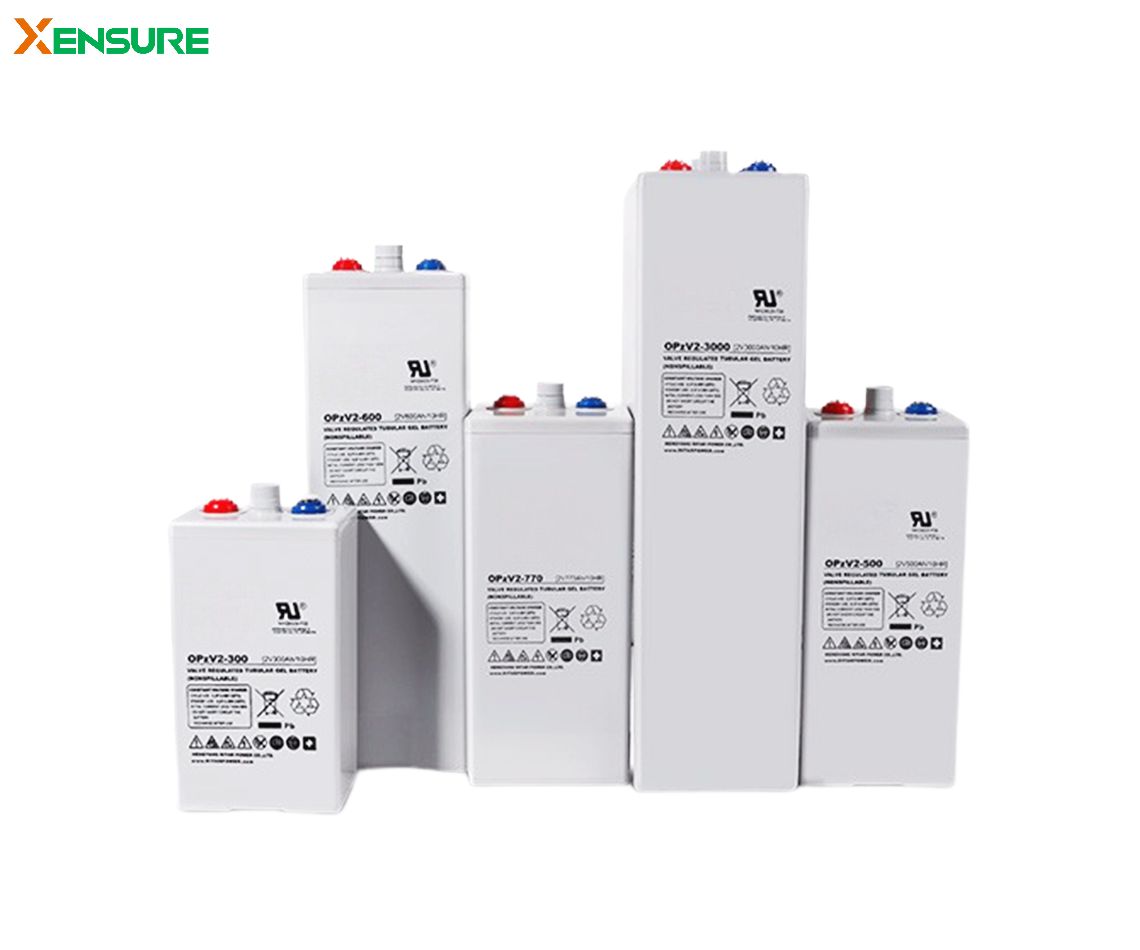
Deploying OPzV tubular gel batteries optimizes off-grid solar energy storage systems by delivering exceptional deep-cycle durability, thermal stability, and a 25-year floating design life. Advanced high-pressure die-cast tubular plates and nano-gel electrolytes prevent acid stratification and active material shedding, maximizing total return on investment for remote power installations today. Furthermore, choosing a 2V deep gel tubular battery provides outstanding cost performance, lowering total cost of ownership compared to short-lived AGM batteries or expensive lithium setups.
This industrial battery platform guarantees lead-free compliance (RoHS standards) along with UL, CE, DIN, and IEC certifications for safe worldwide deployment. Furthermore, maintenance-free gel chemistry eliminates water additions while delivering robust performance across extreme temperature ranges. Consequently, solar microgrid operators preserve capital budgets while securing affordable, long-life renewable energy storage infrastructure today. Explore our complete product-category inventory to upgrade your off-grid solar energy storage batteries now.
4 Off-Grid Solar Bottlenecks Solved by OPzV Tubular Batteries
Solar power developers, telecommunications engineers, and utility operators face severe battery failures when storing renewable energy in remote locations. Rapid capacity loss, acid stratification, and thermal runaway destroy standard flat-plate batteries during deep daily discharge cycles. Operations managers regularly identify four primary energy storage failure scenarios daily.
Acid Stratification Destructive Failure in Deep Cycle Solar Storage
Standard liquid flooded or flat-plate AGM batteries suffer from heavy electrolyte acid stratification during prolonged daily cycling. Dense sulfuric acid sinks to cell bottoms, causing severe grid corrosion below while starving upper plate sections during solar charge cycles. Consequently, flat-plate batteries lose storage capacity rapidly, suffering irreversible sulfation and premature total battery failure within three years. Advanced fumed silica nano-gel immobilizes acid liquid completely, preventing acid stratification and ensuring uniform chemical activity throughout cell height.
Extreme Thermal Runaway and Electrolyte Dry-Out in Hot Climates
Off-grid solar installations located in desert regions experience high ambient operating temperatures over 40°C continuously. High thermal environments accelerate water evaporation in flooded cells and cause dangerous thermal runaway in tightly packed AGM batteries. Therefore, remote telecom towers face sudden power blackouts, requiring expensive emergency technician visits and premature battery string replacements. High-purity silica gel acts as a massive heat sink, maintaining stable internal temperatures and preventing electrolyte dry-out in hot climates.
Rapid Active Material Shedding Destroying Flat-Plate Cells
Frequent deep discharge cycles cause standard flat-plate positive grids to expand and contract repeatedly during daily solar operations. Continuous mechanical expansion causes active lead dioxide paste to flake off, short-circuiting cell bottoms and dropping voltage rapidly. As a result, solar microgrids lose critical backup power reserve capacity during consecutive cloudy weather periods. Die-cast $10\text{ MPa}$ high-pressure tubular positive grids encase active material inside woven gauntlets, eliminating paste shedding completely.
Excessive Maintenance Overhead and Frequent Battery Replacements
Deploying low-cost flooded lead-acid batteries requires frequent distilled water refills and periodic equalization charging across remote site locations. High technician travel expenses and logistical challenges in rugged terrain inflate ongoing operational maintenance budgets drastically over time. Thus, solar project developers face poor long-term financial returns despite low initial equipment purchase prices. Zero-maintenance sealed OPzV gel construction eliminates water refilling routines, delivering 25 years of floating design life effortlessly.
Technical Solutions: OPzV Series 2V Deep Gel Tubular Battery
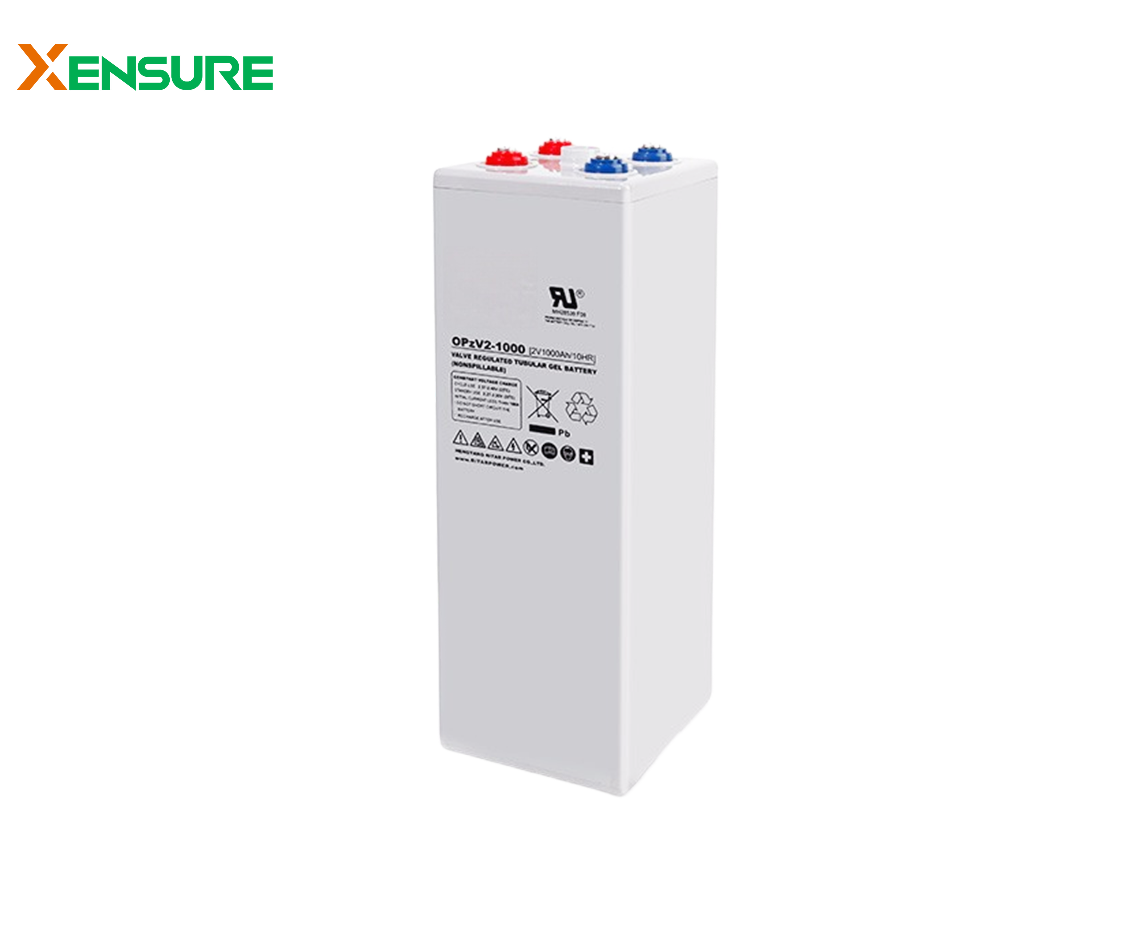
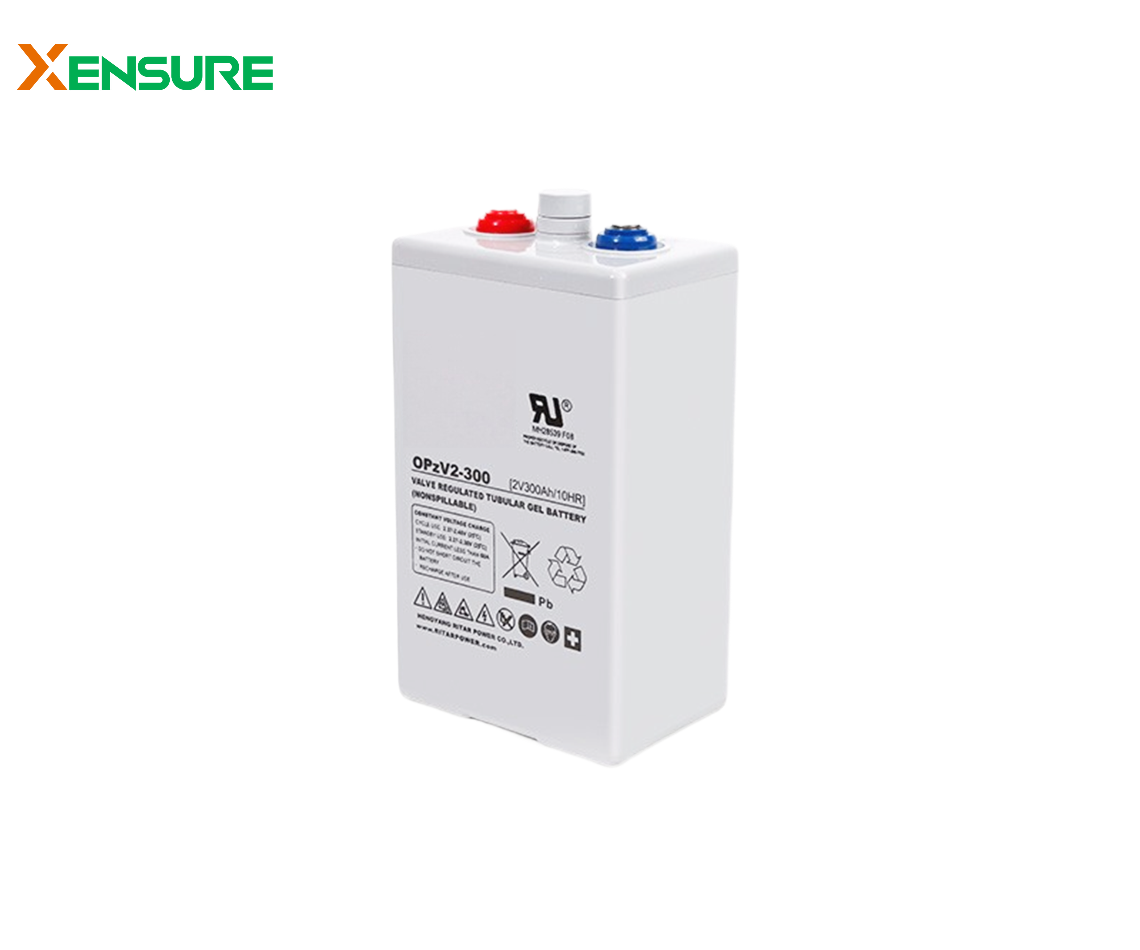
The OPzV Series 2V Deep Gel Tubular Battery offers unmatched reliability, massive 200Ah to 3000Ah capacity options, and superior cost-effective value. It combines high-density tubular positive plates with gas-phase nano-silicon dioxide gel electrolytes seamlessly.
Rugged $10\text{ MPa}$ Die-Cast Tubular Construction
Manufactured using $10\text{ MPa}$ high-pressure die-casting, the positive tubular plates feature dense grid structures that resist severe electrochemical corrosion. High-temperature and high-humidity curing processes ensure perfect capacity consistency and long service life across every production batch. Furthermore, check out our detailed technical-guide on comparing OPzV tubular gel technology against flat-plate AGM batteries for high-temperature solar applications.
Gas-Phase Nano-Silica Electrolyte and Smart Pressure Valves
Gas-phase nano-silicon dioxide gel maintains uniform electrolyte distribution, preventing gel cracking, acid leakage, and dry-out under extreme thermal conditions. A hidden independent safety valve prevents pressure blockages, managing internal gas pressure safely across a 25-year design life. Consequently, solar power stations achieve exceptional operational stability with zero water maintenance requirements throughout decades of continuous service.
Full Capacity Performance and Certified Industrial Compliance
One-time glue addition and optimized internal formation ensure batteries reach 100% full rated capacity from initial installation day. The OPzV series complies fully with DIN, IEC, GB/T, YD/T, UL, CE, TLC, and ISO management certifications. Additionally, robust cell construction handles deep daily discharges easily, providing an affordable, highly durable power reservoir for mission-critical installations.
Product Specifications & Solar Battery Technology Comparison
The table below compares the OPzV 2V Deep Gel Tubular Battery against standard flat-plate solar batteries.
| Parameter / Feature | OPzV Series Tubular Gel Battery | Standard Flat-Plate AGM / Flooded |
| Capacity Range | $200\text{ Ah to } 3000\text{ Ah}$ ($2\text{V}$ Cells) | Limited Capacity Range ($12\text{V}$ Blocks) |
| Design Life | $25\text{ Years}$ Designed Floating Life | $3\text{ to } 5\text{ Years}$ Standard Service Life |
| Positive Plate Structure | Die-Cast $10\text{ MPa}$ Tubular Grid | Standard Flat Paste-Poured Grid |
| Electrolyte Form | Gas-Phase Nano-Silicon Silica Gel | Liquid Acid or Glass Mat Absorbent |
| Acid Stratification | Zero (Fully Gel-Immobilized Acid) | High Risk (Causes Grid Corrosion) |
| Thermal Tolerance | Excellent Heat Sink (Resists Runaway) | Poor (Prone to Thermal Runaway) |
| Maintenance Level | Zero Maintenance (No Water Refills) | Regular Distilled Water Refills Needed |
| Compliance Standard | Lead-Free Compliance (RoHS Certified) | Variable Compliance Standards |
Essential Advantages for Solar Energy Storage Operations
Consider these major operational and economic benefits when integrating OPzV tubular gel batteries into your solar energy storage project today.
-
Decades-Long Service Life: Designed for a 25-year floating life, dramatically reducing long-term battery replacement costs across solar projects.
-
Exceptional Deep Cycle Resilience: Die-cast tubular plates withstand daily deep discharge cycles without suffering active material loss or capacity degradation.
-
Zero Maintenance Overhead: Sealed recombinant gel construction eliminates distilled water refills, lowering remote site operational maintenance expenses.
-
Outstanding Heat Tolerance: Nano-gel electrolyte acts as a thermal heat sink, ensuring safe, reliable operation in extreme desert climates.
Maximize your solar energy storage reliability and secure the best long-term investment value today! Browse our wide product-category selection to order your OPzV tubular gel batteries now.