

For telecom operators, data center integrators, and power system distributors, battery procurement involves more than selecting a suitable voltage and capacity. A reliable backup solution must fit the installation environment, support the required runtime, and deliver consistent performance across multiple equipment sites.
A UPS lead-acid battery remains a practical option for many commercial backup power systems. However, buyers must evaluate its capacity, installation design, service life, and compatibility with the existing power infrastructure.
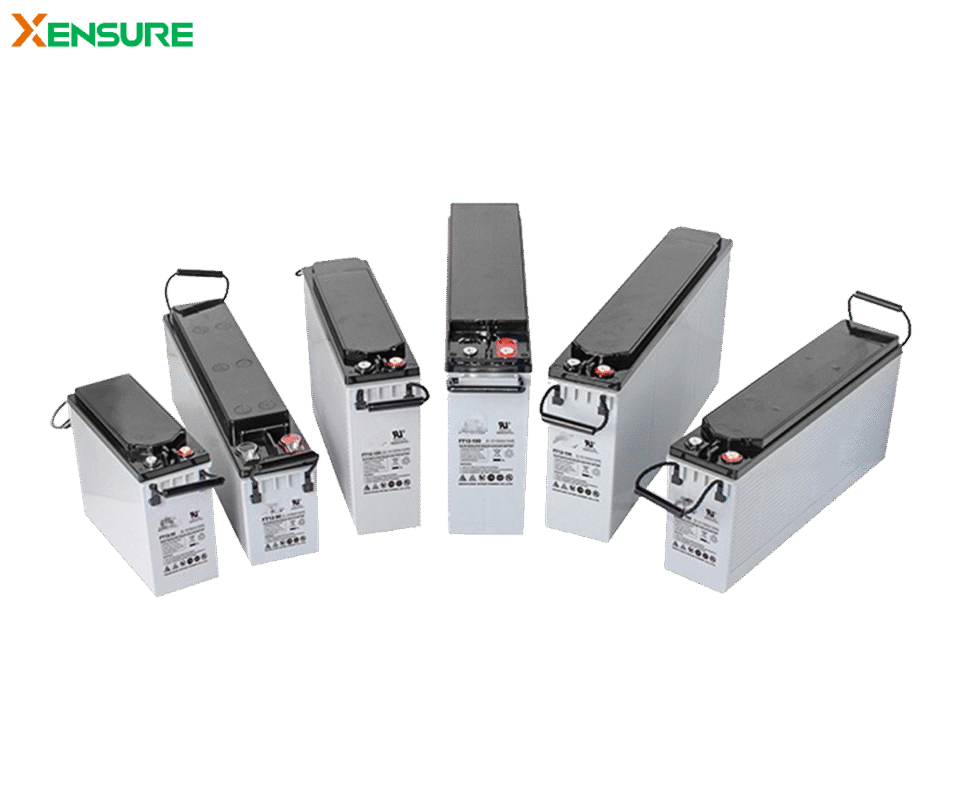
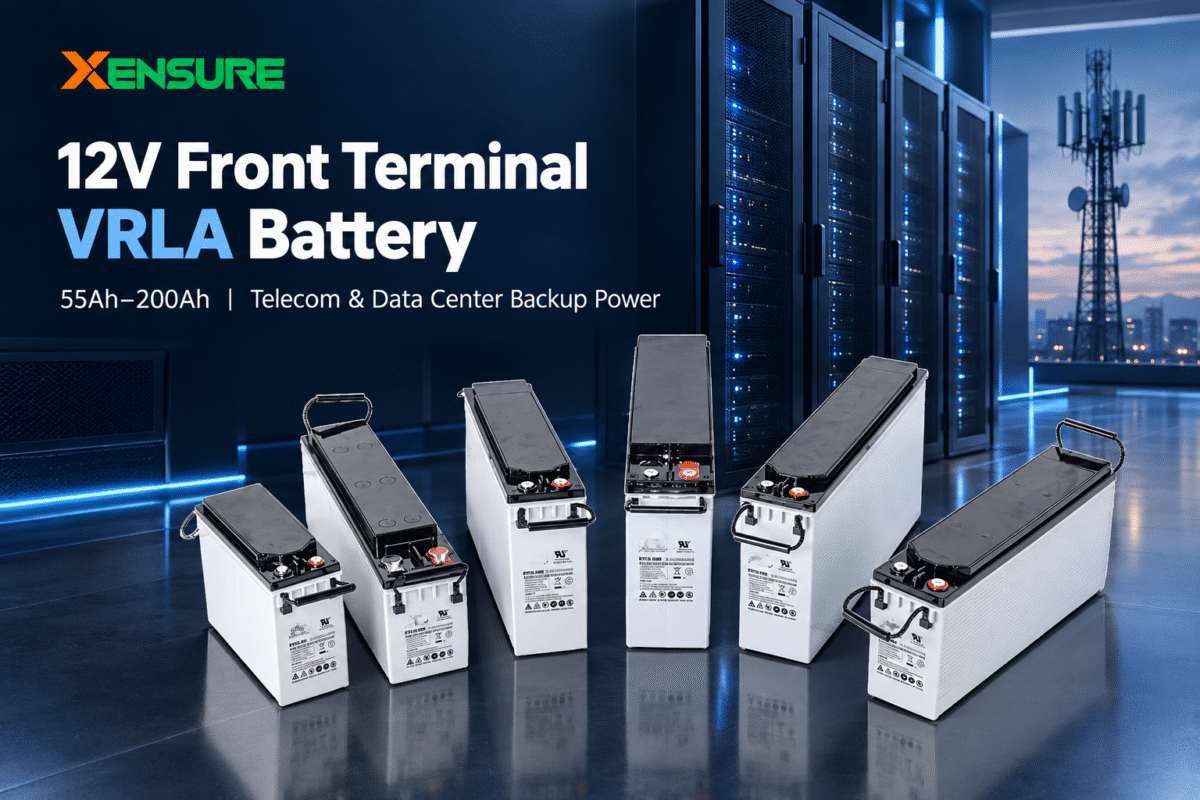
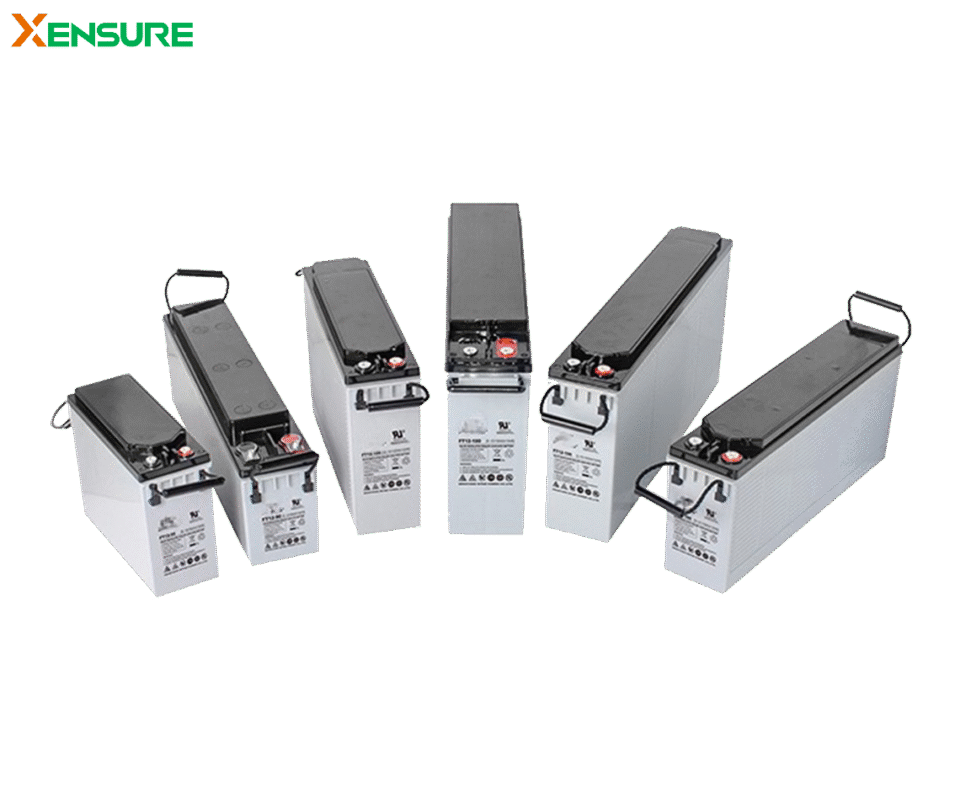
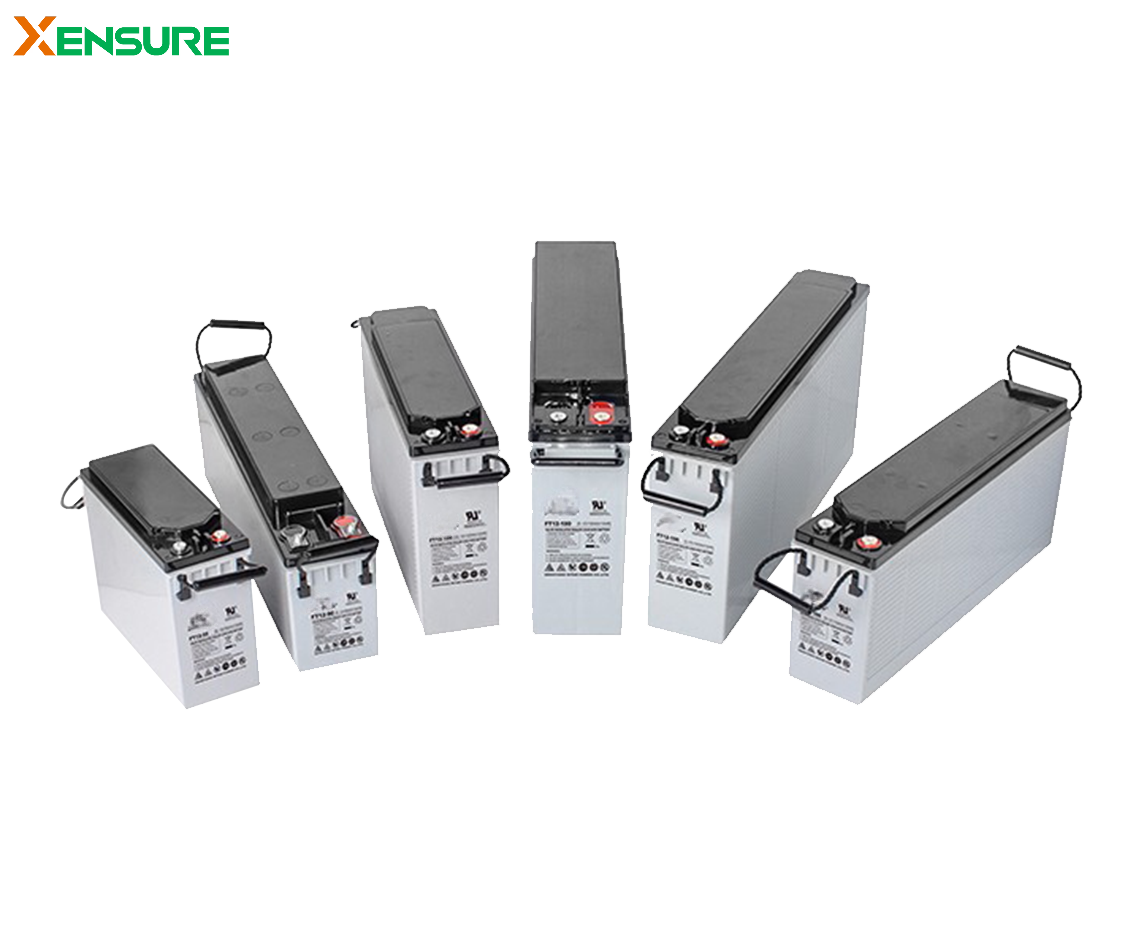
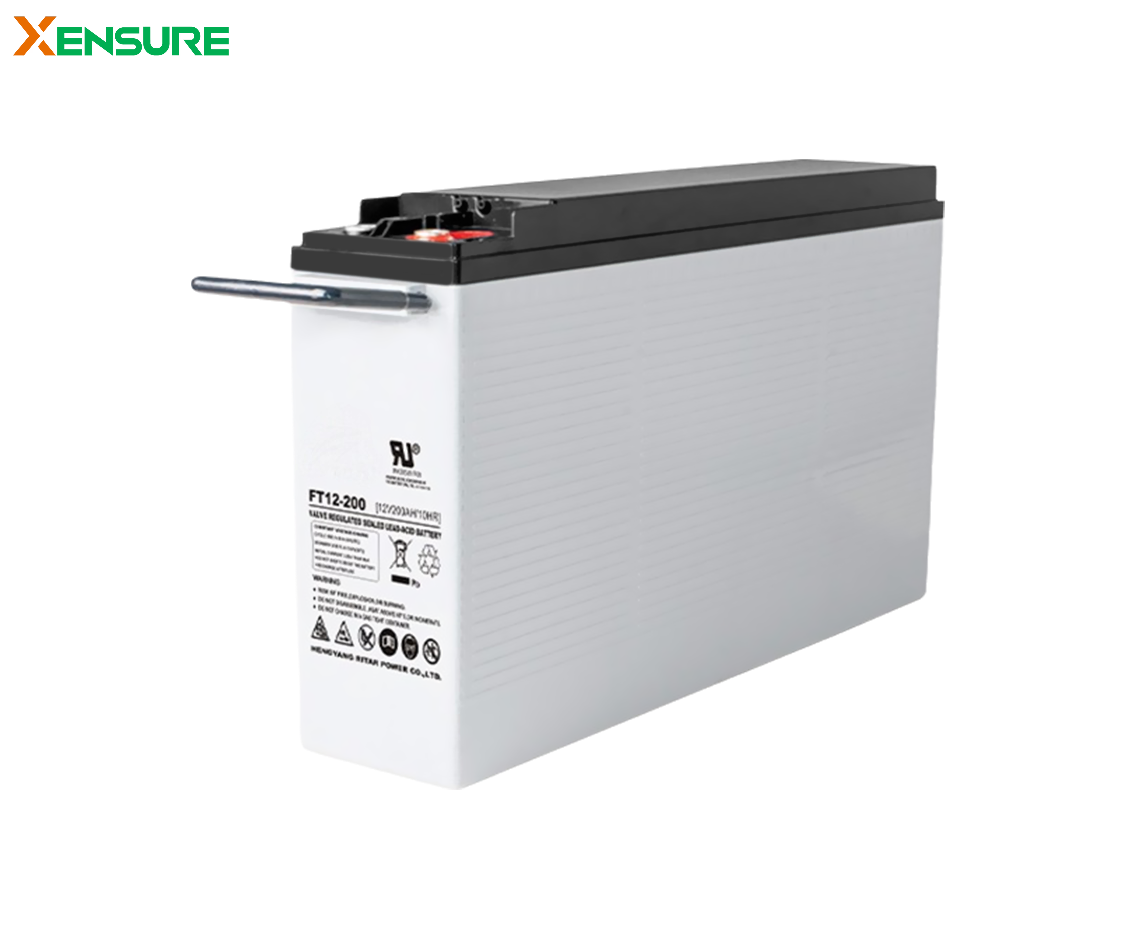
The XST-FT Series Front Terminal VRLA Battery offers a 12V platform with capacities from 55Ah to 200Ah. Its front-access terminals and slim-line structure are designed for 19-inch and 23-inch cabinets, making it suitable for evaluating telecom and data center backup applications.
Match Battery Capacity to the Actual UPS Load
An undersized battery bank may not provide the required backup duration. An oversized configuration may increase initial investment and occupy valuable cabinet space.
For B2B buyers, capacity selection should begin with the UPS load and expected backup time.
Calculate the Required Battery Configuration
Before requesting a quotation, engineering and purchasing teams should confirm:
- UPS rated power and actual connected load
- Required backup duration
- DC bus voltage and battery bank configuration
- Battery capacity and discharge conditions
- Charging voltage and current compatibility
- Operating temperature and installation environment
The XST-FT Series provides capacities from 55Ah to 200Ah at the C10 rate and 25°C. All models use a rated voltage of 12V.
These options give system integrators flexibility when planning different backup configurations. However, the final battery quantity and arrangement should follow the UPS manufacturer’s specifications and the project’s load calculations.
Consider Cabinet Space and Installation Efficiency
UPS systems in telecom facilities and data centers often operate within limited equipment spaces. Battery dimensions and terminal positions can directly affect installation planning.
A conventional battery layout may require additional clearance for cable connections. This can make maintenance less convenient in densely arranged racks.
Choose a Front Terminal Battery for Rack Applications
The XST-FT Series features front-access terminals. Technicians can connect cables and perform routine checks from the front of the battery.
Its special size design is particularly suitable for 19-inch and 23-inch cabinets. The slim-line architecture also supports compact equipment layouts.
For large-scale projects, this design can simplify battery installation across multiple racks and facilities.
Before ordering, buyers should still verify battery depth, terminal clearance, cable routing, and rack load capacity. A dimensional drawing is essential for confirming physical compatibility.
Assess Long-Term Value Beyond the Purchase Price
The initial battery price represents only part of the total project cost. Replacement frequency, maintenance labor, transportation, and potential downtime also affect long-term investment.
This is especially important when a UPS lead-acid battery supports critical equipment or distributed infrastructure.
Review Material Quality and Designed Float Life
The XST-FT Series uses 99.994% high-purity lead and an advanced patented alloy formulation. These materials help resist grid corrosion.
Its manufacturing process includes high-temperature and high-humidity curing. The ear-hanging plate design also supports consistency across production batches.
The series has a designed floating charge life of 12 years. Actual service life depends on operating temperature, charging conditions, discharge depth, and maintenance practices.
For procurement teams, these details provide a useful basis for comparing battery lifecycle value rather than focusing only on unit price.
Verify Safety Features and Product Compliance
UPS batteries operate near electrical equipment and other infrastructure components. Buyers should therefore review battery sealing, gas management, pressure control, and applicable safety requirements.
Examine Internal Protection and Ventilation Design
The XST-FT Series incorporates a central gas collection system to manage collected emissions. Its hidden independent safety valve helps maintain internal pressure and reduces the risk of valve blockage.
The sealed, maintenance-free design supports installation in suitable backup power environments. However, the battery room or cabinet must still meet the manufacturer’s ventilation and safety requirements.
The series meets IEC, JIS, and GB/T testing standards. It also holds UL and CE certifications, alongside ISO 9001, ISO 14001, and ISO 45001 management system certifications.
For project procurement, request model-specific certificates and test reports. Confirm that the documents cover the exact battery model and intended application.

Evaluate the Supplier Before Placing a Bulk Order
For distributors, UPS manufacturers, and system integrators, supplier evaluation is an important part of procurement planning.
A competitive quotation is not enough. Buyers also need clear technical documentation, consistent production quality, and dependable delivery arrangements.
Use a Technical and Commercial Checklist
| Evaluation Item | What Buyers Should Confirm |
|---|---|
| Electrical specifications | Rated voltage, capacity, and C10 rating |
| Physical dimensions | Battery size and terminal layout |
| UPS compatibility | Charging requirements and battery configuration |
| Service life | Designed float life and test conditions |
| Compliance | Applicable standards and certificates |
| Commercial terms | Warranty, production schedule, and delivery terms |
For the XST-FT Series, the 12V platform and 55Ah–200Ah capacity range provide a clear starting point for technical evaluation.
Before mass production, buyers should also confirm packaging, transportation requirements, warranty conditions, and long-term replacement availability.
Where Can the XST-FT Series Be Used?
The XST-FT Series is designed for backup power applications that require compact installation and convenient front-side access.
Typical application areas include:
- Telecom facilities: Central offices, cellular base stations, and remote switching sites.
- Data centers: Server rooms and rack-mounted backup power systems.
- UPS installations: Commercial and industrial uninterruptible power supply systems.
- Renewable energy cabinets: Localized solar and wind energy storage systems, subject to system compatibility.
- Railway infrastructure: Communication and signaling backup power applications.
For distributors, contractors, and infrastructure integrators, the series offers several capacity options within one front terminal product range.
Explore our Front Terminal VRLA Battery Collection to review available models and configurations. For project quotations, share your required capacity, cabinet dimensions, and application details to help identify a suitable battery solution.
Frequently Asked Questions
Q1: What capacity options are available in the XST-FT Series?
The series covers 55Ah to 200Ah at the C10 rate and 25°C. All models have a rated voltage of 12V.
Q2: Why choose a front terminal battery for a UPS rack?
Front-access terminals simplify cable connections and routine maintenance. This design is useful in compact 19-inch and 23-inch cabinets.
Q3: What does a 12-year designed float life mean?
It refers to the designed service life under specified float-charge conditions. Actual performance depends on temperature, charging management, discharge conditions, and installation practices.
Q4: Can 12V batteries support a 48V UPS or telecom system?
A 48V DC system may use multiple 12V batteries connected in series. The final configuration must match the system design and manufacturer recommendations.
Q5: What information should buyers provide when requesting a bulk quotation?
Provide the required capacity, battery quantity, UPS model, cabinet dimensions, application environment, and expected delivery schedule. These details help suppliers assess technical compatibility and prepare accurate quotations.