


UN Modular UPS Battery Solution helps small and medium enterprises manage changing backup power requirements. Entre-temps, scalable power modules, adjustable battery settings, and online double-conversion technology support practical power planning. Cependant, reliable backup depends on correct capacity sizing, battery configuration, and maintenance procedures. Donc, businesses should evaluate the entire UPS arrangement before selecting a solution.
For organizations planning future expansion, modular architecture offers a flexible starting point. It also helps teams align equipment investments with actual demand. Explore our Modular UPS Product Range

Can a Modular UPS Battery Solution Handle Growing IT Loads?
Server rooms, network cabinets, and business applications rarely maintain constant power demand. Entre-temps, equipment upgrades can increase loads before the existing UPS reaches its intended replacement date. Par conséquent, businesses need an expansion strategy that accommodates future capacity requirements.
UN Modular UPS Battery Solution allows operators to add compatible power modules in stages. This approach can reduce the need for premature system replacement. Cependant, available slots, cabinet limits, and module ratings must support the planned expansion.
The +Power E supports modular expansion through plug-and-play power modules. Its supplied configuration describes one to three modules rated at 30 kilowatts each. En plus, the product name identifies 20-kilowatt and 30-kilowatt module options. Buyers should confirm the exact module rating for their selected model.
The system uses three-phase input and three-phase output at 400 volts. Its output power factor is rated at 1.0. Together, these specifications support capacity planning for suitable small and medium enterprise applications.
How Can Modular UPS Design Simplify Maintenance?
Continuous business applications often leave limited time for equipment servicing. Entre-temps, troubleshooting can become more demanding when teams cannot quickly identify the affected component. Donc, maintainability should form part of the initial UPS selection process.
A modular UPS can help technicians isolate problems to individual power modules. This approach may reduce mean time to repair (MTTR), depending on fault conditions and service procedures. Cependant, recovery time also depends on spare parts, technician training, and equipment access.
The +Power E features a built-in maintenance bypass switch. This feature supports maintenance procedures while compatible loads remain supplied, subject to correct system design and operation. En plus, the modular architecture can simplify component-level servicing.
Nevertheless, maintenance bypass operation requires clear procedures and appropriate operator training. Teams should confirm transfer behavior and bypass limitations before installation. They should also verify whether the selected configuration supports their required maintenance strategy.
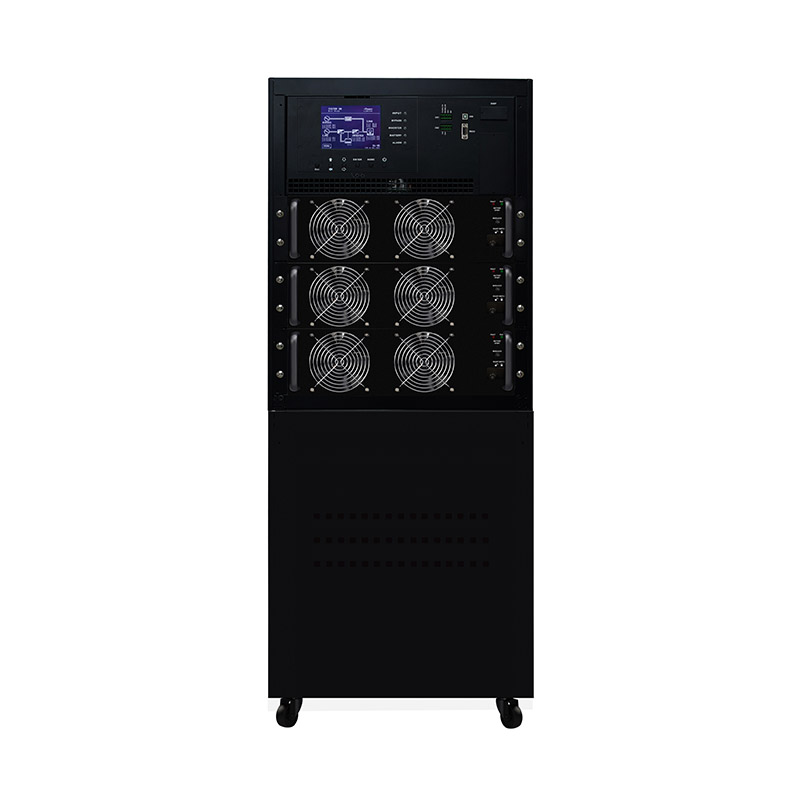
Can a Compact UPS Battery Configuration Save Floor Space?
Small and medium enterprises often share equipment rooms with networking, storage, and security systems. Par conséquent, floor space must accommodate both installed equipment and service access. Entre-temps, poor equipment placement can complicate maintenance and airflow management.
The +Power E stacks the UPS and battery pack in a tower arrangement. This layout can reduce the floor area required compared with some separate equipment arrangements. Cependant, actual space requirements depend on battery capacity, cabinet dimensions, ventilation, and maintenance clearances.
The system combines its UPS and battery pack within a tower-style installation. Donc, facility planners can evaluate the complete arrangement before allocating floor space. En plus, the 5.7-inch graphic LCD provides a local interface for configuration and routine checks.
Operators should still follow documented inspection and operating procedures. They should also reserve sufficient clearance for servicing and equipment ventilation. A compact layout should never replace appropriate installation planning.
How Does a Modular UPS Battery Solution Support Runtime Planning?
Backup duration depends on several factors. These include connected load, battery capacity, battery condition, temperature, and discharge limits. Donc, the UPS power rating alone cannot establish the available backup time.
Businesses should first estimate their critical load and required ride-through duration. Suivant, they should select a compatible battery arrangement that meets those requirements. A clear battery plan also helps teams schedule inspections and future replacements.
Technical Solution: Adjustable Battery and Charging Settings
The +Power E supports adjustable battery quantities and charging current. These features provide flexibility when configuring the system for different backup requirements. Cependant, every setting must remain within the manufacturer’s specified operating limits.
Battery selection should also consider the chosen battery type and charging characteristics. Entre-temps, expected runtime should come from validated battery calculations rather than assumptions. Read our Technical Guide to UPS and Battery Planning
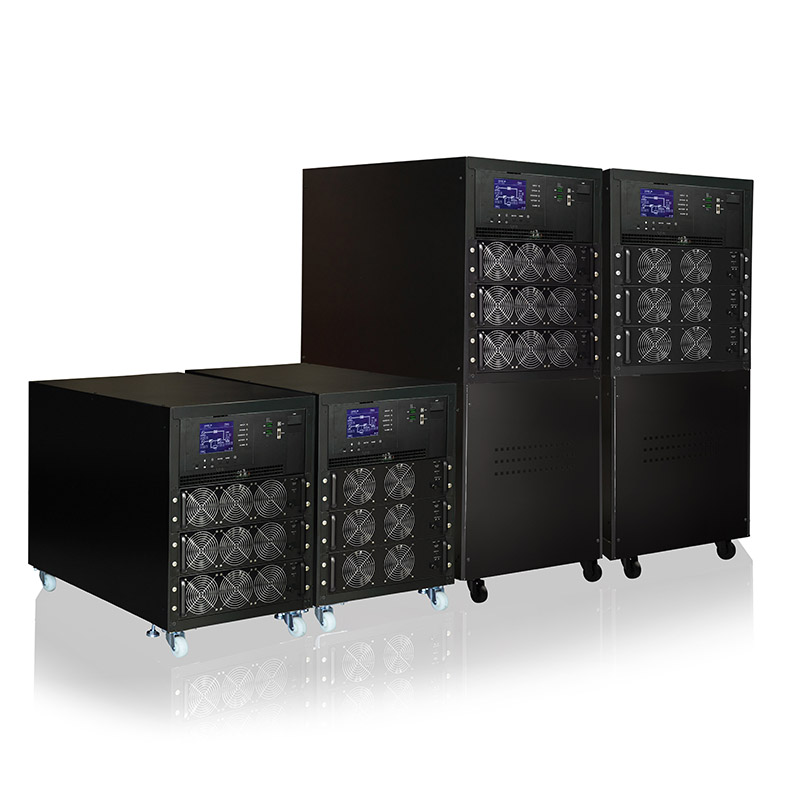
Can Parallel UPS Cabinets Improve Power Availability?
Some facilities require additional capacity or a defined redundancy arrangement. Entre-temps, parallel operation needs careful planning for load sharing, protection, and maintenance. Donc, buyers should distinguish installed capacity from the capacity available during a fault.
The +Power E supports one-plus-one cabinet parallel operation. This capability allows engineers to assess a parallel architecture against the site’s requirements. Cependant, the resulting resilience depends on system configuration, load distribution, and the intended redundancy design.
Before installation, engineers should confirm cabinet compatibility and the intended operating mode. They should also review fault isolation and maintenance procedures. Par conséquent, the final design can reflect the site’s required capacity and continuity objectives.
+Power E Technical Specifications and Compliance Checks
The following table summarizes the available product information. It also identifies details that buyers should confirm during technical evaluation.
| Paramètre | +Power E stated specification | Engineering review |
|---|---|---|
| UPS topology | Online double conversion | Confirm operating and bypass modes |
| Input and output | Three-phase input / three-phase output | Tension nominale: 400 volts |
| Power modules | Product name lists 20-kilowatt and 30-kilowatt options | Confirm the exact module rating by model |
| Module quantity | One to three 30-kilowatt modules in the supplied description | Verify the applicable configuration |
| Facteur de puissance de sortie | 1.0 | Confirm the applicable output rating |
| Parallel operation | One-plus-one cabinet parallel operation | Validate the intended redundancy design |
| Battery configuration | Adjustable battery quantity and charging current | Follow the manufacturer’s battery limits |
| Entretien | Commutateur de dérivation de maintenance intégré | Confirm site procedures and load compatibility |
| User interface | 5.7-inch graphic LCD | Review local monitoring and configuration needs |
| Certifications | Not specified in the supplied product information | Request applicable safety, EMC, and market-compliance documents |
Q&UN
Can a Modular UPS Battery Solution support future expansion?
Oui, when the selected cabinet supports additional compatible modules. The +Power E offers modular expansion, but buyers should verify the available configuration first.
Does modular design guarantee uninterrupted maintenance?
Non, not in every operating condition. The built-in maintenance bypass supports planned servicing, subject to correct configuration and approved procedures.
How should businesses estimate battery backup time?
Start with the critical load and required runtime. Then account for battery specifications, operating conditions, discharge limits, and future capacity needs.
Which details should buyers confirm before ordering?
Confirm module ratings, cabinet capacity, battery compatibility, charging limits, and parallel operation requirements. Also request the relevant technical documentation and compliance certificates for the target market.