

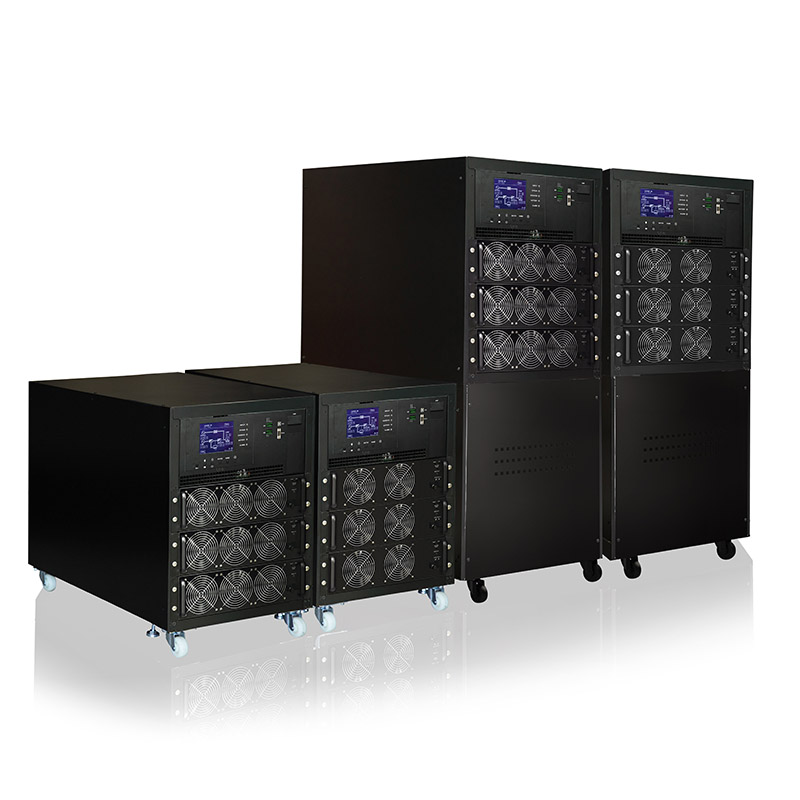
Les charges de travail modernes de l'intelligence artificielle créent des densités de puissance de rack sans précédent dans les installations de l'entreprise. Par conséquent, deploying a UPS modulaire pour les centres de données IA ensures seamless operational continuity during rapid expansion. Next-generation machine learning servers demand robust continuous power alongside strict conformité sans plomb environmental standards. Donc, integrating a modular UPS system protects sensitive GPU clusters against sudden grid fluctuations effortlessly. En outre, deploying 30kW scalable power modules delivers dynamic capacity scaling whenever computational workloads increase. Par conséquent, data center managers maintain high energy efficiency while optimizing capital expenditure over time.
High-density AI infrastructure requires ultra-reliable back-up power architectures to prevent catastrophic compute crashes. In addition, variable AI training cycles generate extreme transient power swings within modern server racks. Ainsi, flexible uninterruptible power systems must adapt to shifting electrical loads dynamically.
High-Density AI Data Center Power Challenges
Sudden Load Spikes During AI Model Training
Large language model training creates extreme current surges across GPU server nodes simultaneously. De plus, legacy static power systems struggle to handle sudden step-load increases without voltage drops. Par conséquent, unexpected power sags cause severe server reboots and lost training progress. Heureusement, a high efficiency online double conversion UPS responds to transient surges instantly. Ainsi, your infrastructure remains completely stable during heavy computational tasks.
In addition, fluctuating power draws stress traditional power distribution units and battery systems constantly. Data center operators face increased risks of component overheating and sudden breaker trips. High-frequency digital processing demands immediate voltage stabilization without transfer delay times. Donc, dynamic modular power protection eliminates performance bottlenecks across AI compute clusters.
Severe Floor Space Constraints in Urban Edge Facilities
Edge data centers housing localized AI inference nodes operate within extremely tight physical spaces. En outre, traditional bulky UPS cabinets consume valuable square footage needed for high-density server racks. Par conséquent, facility managers struggle to expand processing capacity within existing building footprints. Inversement, a vertical tower stack design combines power modules and battery packs compactly. Ainsi, you maximize available floor space for revenue-generating compute hardware.
En outre, real estate costs in metro areas make physical footprint expansion prohibitively expensive. Stacking modular hardware vertically optimizes spatial efficiency while simplifying cable routing immensely. Par conséquent, operators fit more GPU processing power inside smaller infrastructure enclosures.
High Downtime Costs During Routine Maintenance
Maintaining traditional monolithic power systems requires shutting down entire power lines during servicing. En plus, scheduled maintenance windows disrupt critical AI processing schedules and customer service availability. Par conséquent, data center operators suffer costly service disruptions and missed service level agreements. Heureusement, plug-and-play modular design lowers mean time to repair significantly. Ainsi, technicians swap active modules without interrupting critical server operations.
De plus, manual maintenance procedures on monolithic hardware increase the risk of technician error. Hot-swappable architecture isolates faults automatically before systemic failures occur across downstream racks. Donc, maintenance teams perform routine upgrades safely without dropping sensitive enterprise workloads.
Technical Architecture of the +Power E Modular UPS
Online Double Conversion Technology and Unity Power Factor
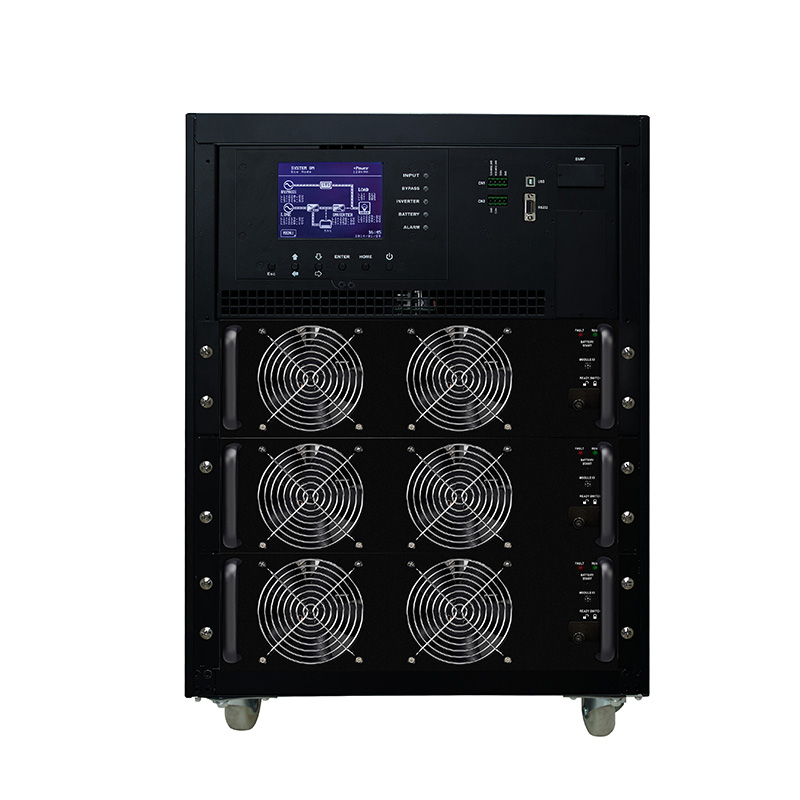
The +Power E Modular UPS 3P/3P 400V utilizes advanced high-efficiency double conversion technology. Par conséquent, it delivers pure sine wave power while isolating sensitive equipment from electrical grid noise. En outre, an output power factor of 1 maximizes real usable power output per module. En effet, deploying 30kW modules delivers thirty full kilowatts without power derating effects. Ainsi, facility operators power more AI compute nodes per rack enclosure.
In addition, true online double conversion eliminates switchover latency during utility power disruptions completely. Energy flows seamlessly through inverter circuits to protect sensitive GPU memory banks continuously. Donc, high-speed matrix calculations proceed without data corruption or hardware interruption.
Flexible Module Scalability and 1+1 Cabinet Parallelization
Each +Power E frame accommodates 1 à 3 plug-and-play 30kW power modules flexibly. Donc, initial installations start at 30kW and scale seamlessly up to 90kW per cabinet. En outre, the system supports 1+1 cabinet parallel operation to achieve 180kW total capacity. Par conséquent, facility managers add power modules incrementally as AI workloads expand over time. Ainsi, initial capital expenditure remains low while future expansion stays simple.
De plus, parallel redundancy ensures uninterrupted operation even if an individual power cabinet fails unexpectedly. The system balances electrical loads automatically across parallel modules to maximize total operational lifespan. Par conséquent, growing enterprises scale their power infrastructure safely alongside computing demands.
Smart Battery Management and System Monitoring
The system features adjustable battery numbers and customizable charging current controls for optimal battery health. En plus, built-in maintenance bypass switches allow safe servicing without interrupting connected server loads. A graphic 5.7-inch LCD interface displays real-time system metrics, load percentages, and fault diagnostics clearly. Donc, facility operators monitor power health continuously to prevent unexpected power failures.
En outre, intelligent battery management prevents overcharging and extends lithium-ion or lead-acid battery lifespans. Advanced digital signal processors track cell temperature, internal resistance, and voltage balance automatically. Ainsi, operators detect failing battery cells early before system degradation occurs.
Spécifications du produit & Certification Comparison
To evaluate technical capabilities objectively, review the +Power E specifications alongside standard monolithic systems:
| Paramètre technique | Traditional Monolithic UPS | +Power E Modular UPS (3P/3P 400V) | Industry / Test Standard |
| Power Scalability | Fixed Capacity (No Modules) | 30kW to 90kW (Up to 180kW Parallel) | CEI 62040-3 |
| Output Power Factor | 0.8 à 0.9 | Facteur de puissance unitaire (1.0) | IEEE 519 Standard |
| System Footprint | Large Horizontal Footprint | Compact Tower Stacked Design | Calibrated Physical Survey |
| Serviceability (MTTR) | High MTTR (>4 Heures) | Ultra-Low MTTR (<30 Mins Hot-Swap) | Internal Reliability Standard |
| User Interface | Basic Text Display | Graphic 5.7″ LCD Monitor | User Experience Survey |
| Eco Compliance | Standard Manufacturing | Conformité sans plomb (RoHS) | RoHS / Certifié CE |
Operational Advantages for Growing AI Infrastructure
Reduced Capital Expenditure Through Pay-As-You-Grow Deployment
Installing massive monolithic power systems upfront wastes capital on unused electrical capacity for years. Donc, modular architecture allows operators to purchase power hardware only when compute demands increase. En outre, high operational efficiency reduces monthly utility bills and total cost of ownership over time. Découvrez notre complète Custom Modular Power Products for scalable data center solutions.
In addition, incremental expansion reduces upfront loan interest and capital allocation risks for growing businesses. Financial teams align infrastructure expenditure directly with active client compute contracts. Ainsi, data centers maintain healthier cash flows while scaling operations rapidly.
Enhanced Maintenance Efficiency and System Availability
Built-in maintenance bypass switches simplify routine electrical inspections and component swaps without load interruption. En outre, hot-swappable power modules allow local technicians to replace faulty hardware in minutes. Par conséquent, facility managers reduce operational risks while maintaining continuous uptime for mission-critical applications. Read our detailed AI Power System Technical Guide to optimize rack distribution layout.
De plus, standardized modular components reduce spare part inventory requirements across multi-site data center deployments. Technicians maintain identical backup modules for fast replacement across multiple server locations. Ainsi, overall facility maintenance becomes faster, cheaper, and far less complex.
Compact Tower Design for Optimized Space Utilization
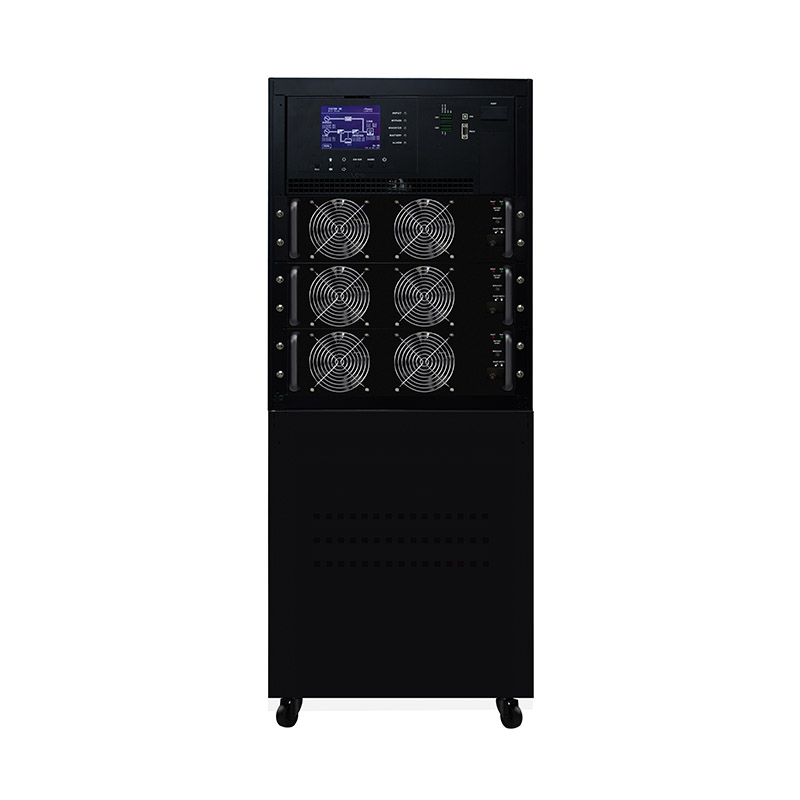
Stacking power modules and battery packs into a single vertical tower minimizes physical floor footprint significantly. Par conséquent, facilities reserve valuable floor space for additional server racks, cooling units, and networking gear. En outre, flexible battery adjustments allow custom backup runtime configurations based on specific facility constraints. Investing in a UPS modulaire pour les centres de données IA secures future-proof energy infrastructure today.
In addition, organized cable routing options inside tower enclosures simplify overall data center cable management. Neat physical layouts improve airflow dynamics around server racks, enhancing total cooling efficiency naturally. Ainsi, compact modular architecture supports cleaner, safer, and more scalable server rooms.